
Tag: LLM

  • CRM: Why Most Craft Brands Don’t Own Their Audience (And Why That’s Dangerous)

    CRM: Why Most Craft Brands Don’t Own Their Audience (And Why That’s Dangerous)

    I’m currently building an AI-powered CRM / growth system for a craft beverage brand.

    Not a funnel.
    Not “more content.”
    Not ads.

    A real system.

    Because over the last few years I’ve noticed something that almost every small craft brand has in common:

    They don’t actually own their audience.

    And that’s a bigger problem than most founders realize.


    The illusion of growth

    From the outside, many craft brands look alive and growing.

    Nice bottles.
    Good design.
    Active Instagram.
    People engaging with posts.
    Maybe even a few events or collaborations.

    But when you zoom in, you often find something fragile behind the surface.

    No real CRM.
    No structured customer database.
    No segmentation.
    No consistent follow-up.
    No owned communication channel.

    Just a collection of:

    • followers
    • occasional customers
    • WhatsApp chats
    • spreadsheets
    • and scattered conversations

    Floating around.

    That’s not an audience.
    That’s noise.


    What I saw in our first conversation

    During my first strategic call with the founder of this brand, something very normal happened.

    Nothing dramatic.
    Just chaos.

    A recent launch had created stress.
    Schedules were overlapping.
    Things were being handled manually.
    Decisions were happening in real time.
    Adjustments everywhere.

    Completely understandable.
    Also completely unsustainable.

    Because when everything depends on memory, chat threads, and urgency, growth becomes fragile.

    And fragile systems break exactly when things start working.


    Most small brands don’t have a marketing problem

    They have an infrastructure problem.

    They think they need:

    • more content
    • more ads
    • more visibility
    • more posts

    But what they actually need is:

    A system that captures, organizes, and nurtures attention.

    If someone discovers your brand today, what happens next?

    Do you know who they are?
    Can you contact them again?
    Can you tell them your story?
    Can you guide them toward a first purchase?
    Can you bring them back later?

    For most craft brands, the honest answer is:

    not really.


    Followers are rented. Contacts are owned.

    Social media creates visibility.

    But visibility without capture is wasted attention.

    If Instagram disappeared tomorrow:

    • how many of your followers could you reach?
    • how many customers could you contact?
    • how many distributors could you notify?
    • how many loyal buyers could you reactivate?

    For most small brands, the number is close to zero.

    That’s dangerous.

    Because it means the brand exists only as long as platforms allow it to.


    So we’re starting from zero (on purpose)

    Before talking about ads, campaigns, or growth tactics,
    we’re building something much more fundamental.

    A real audience infrastructure.

    Here’s where we started this week:

    1. Creating a central customer database
    2. Segmenting contacts (private customers, horeca, distributors)
    3. Setting up a clean opt-in system
    4. Designing storytelling email sequences
    5. Connecting everything through automation

    Nothing fancy.
    Just foundations.

    Because growth without infrastructure creates stress.
    Growth with infrastructure creates momentum.


    A different way to think about marketing

    Most people think marketing starts with visibility.

    I think it starts with ownership.

    Owning:

    • your audience
    • your communication
    • your relationships
    • your data
    • your narrative

    Once you have that, everything else becomes easier:

    • ads work better:
    • content compounds
    • word of mouth spreads
    • sales become predictable

    Without it, everything feels random.


    Why I’m documenting this

    Over the next weeks, I’ll be sharing what we’re building behind the scenes.

    Not theory.
    Real implementation.

    • What works.
    • What breaks.
    • What we change.
    • What we learn.

    Because I believe the future of small craft brands isn’t just creativity or quality.

    It’s systems.

    And the brands that build them early will have an unfair advantage.


    Next week:
    How we’re designing the CRM layer that turns random followers into structured relationships.

    Subscribe to the newsletter if you want to stay updated!
  • 🔥 What Is n8n? (the Future of Automation)

    🔥 What Is n8n? (the Future of Automation)

    A clear, no-fluff guide to what it is, why it matters, and what you can actually do with it.


    The real problem n8n solves

    Most creators, freelancers, and small teams end up trapped in manual glue work.

    • You copy data from one tool to another.
    • You download files, re-upload them somewhere else.
    • You trigger emails by hand.
    • You repeat the same boring steps every single week.

    The result?
    You spend more time managing systems than doing meaningful work.

    This is exactly where n8n comes in.


    What is n8n?

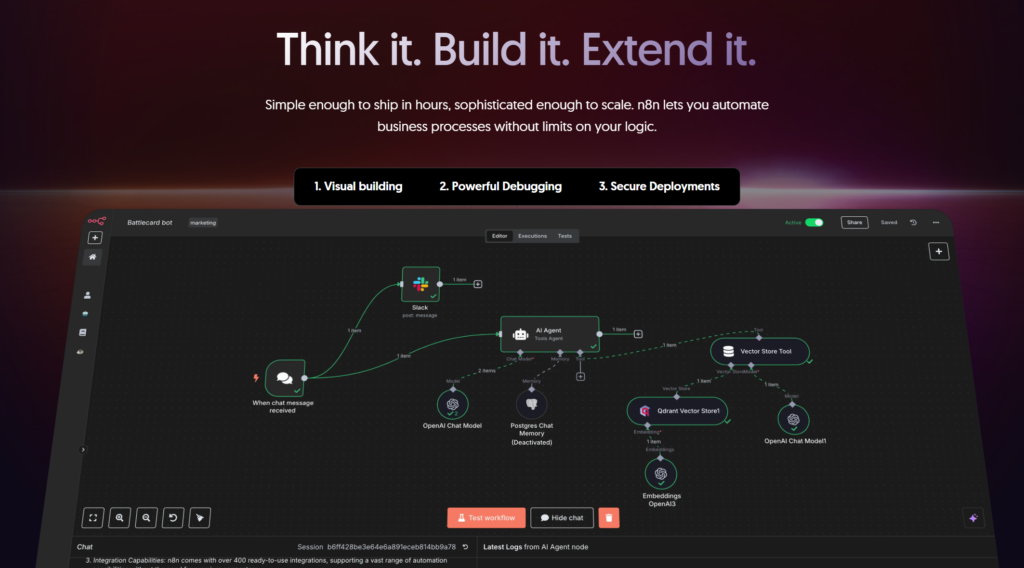
    n8n (pronounced “n-eight-n”) is a workflow automation tool that lets you connect apps, services, and logic together using a visual, node-based editor.

    Think of it as:

    A programmable nervous system for your digital business.

    Instead of writing scripts from scratch or relying on rigid no-code tools, you design workflows by visually connecting nodes:

    • Triggers (something happens)
    • Actions (do something)
    • Logic (if / else, loops, filters)
    • AI & data processing (LLM Agents)

    All without losing control.

    You can try n8n here for free, for 14 days.


    How n8n actually works (in simple terms)

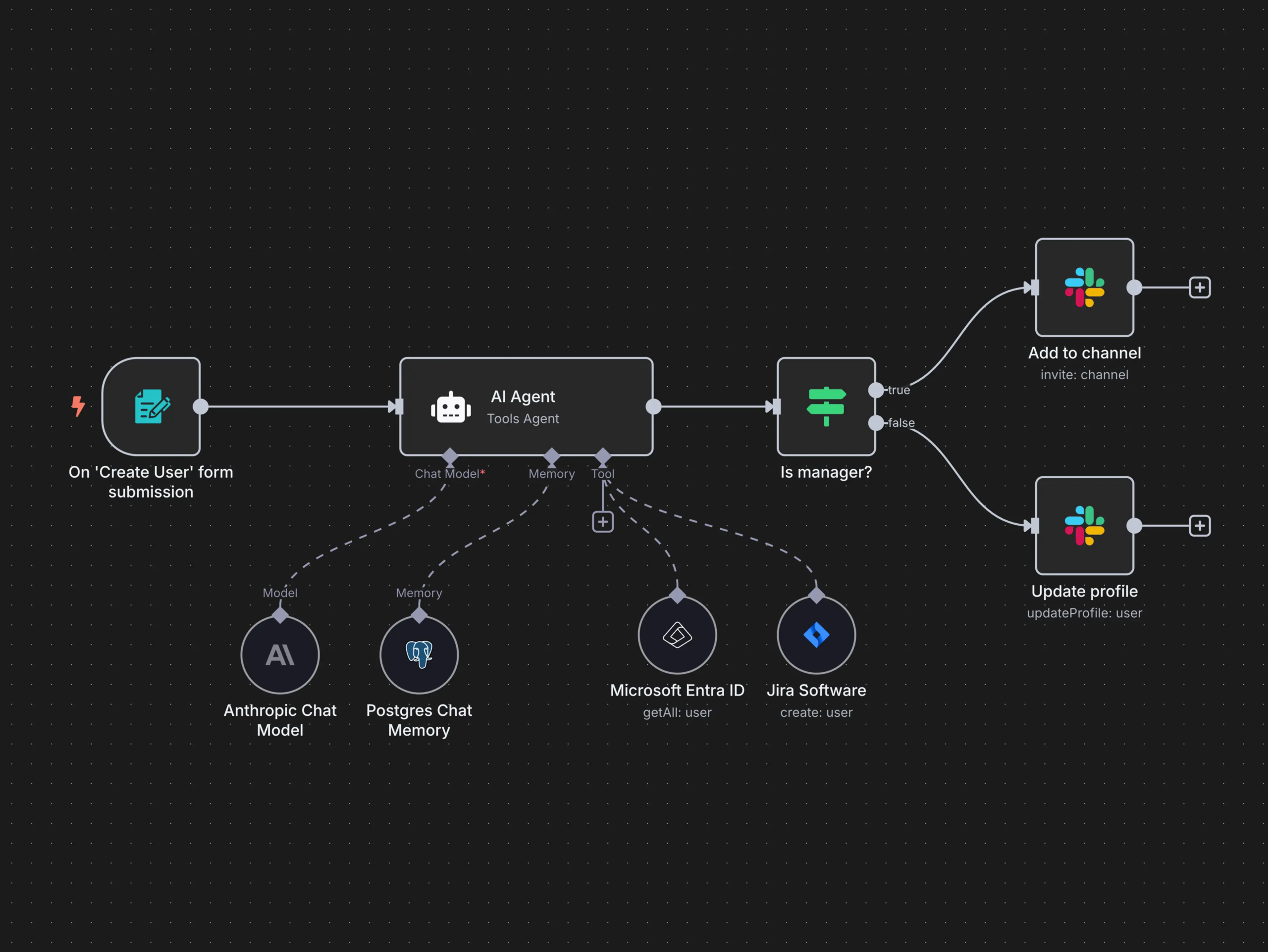
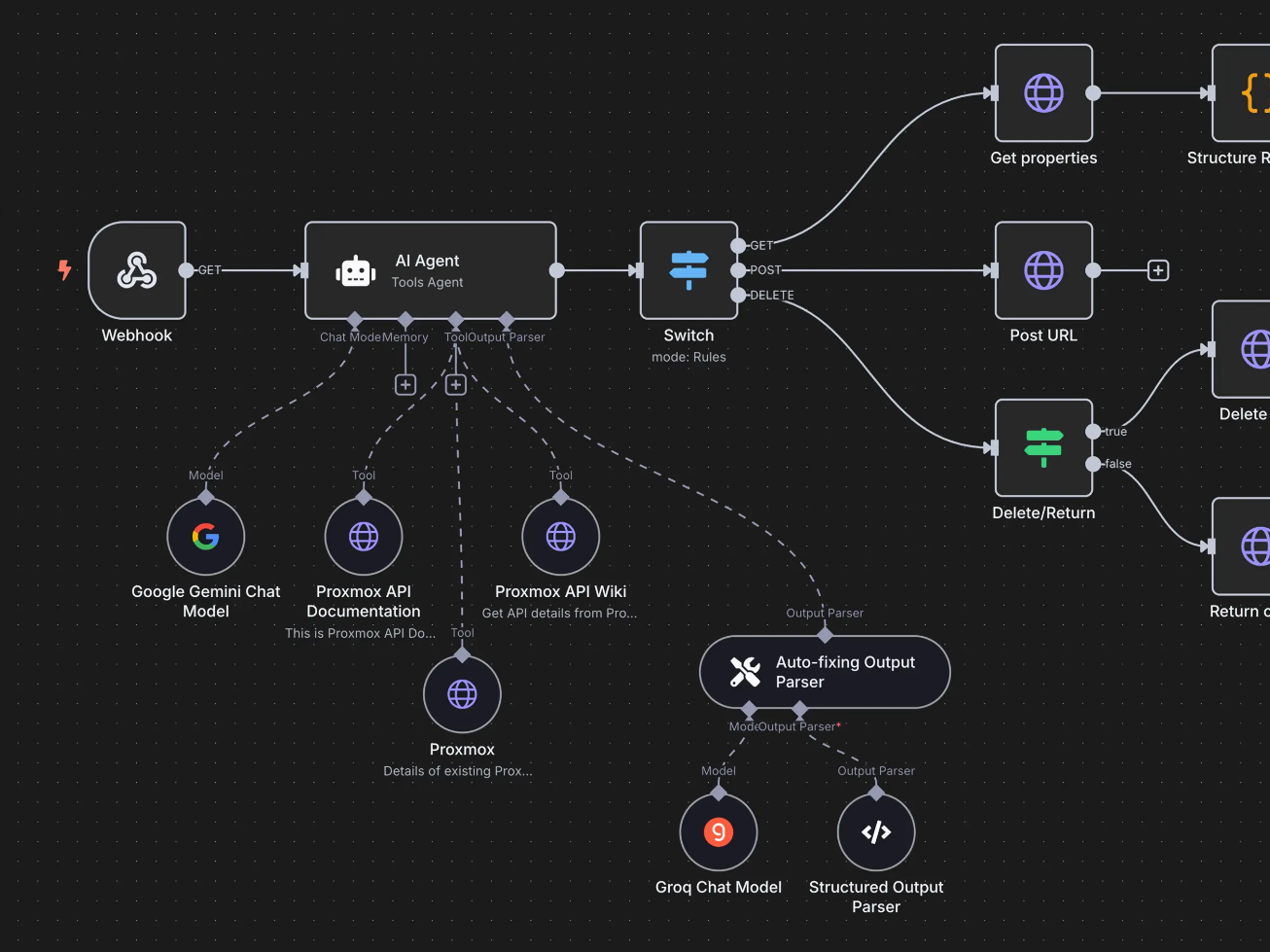
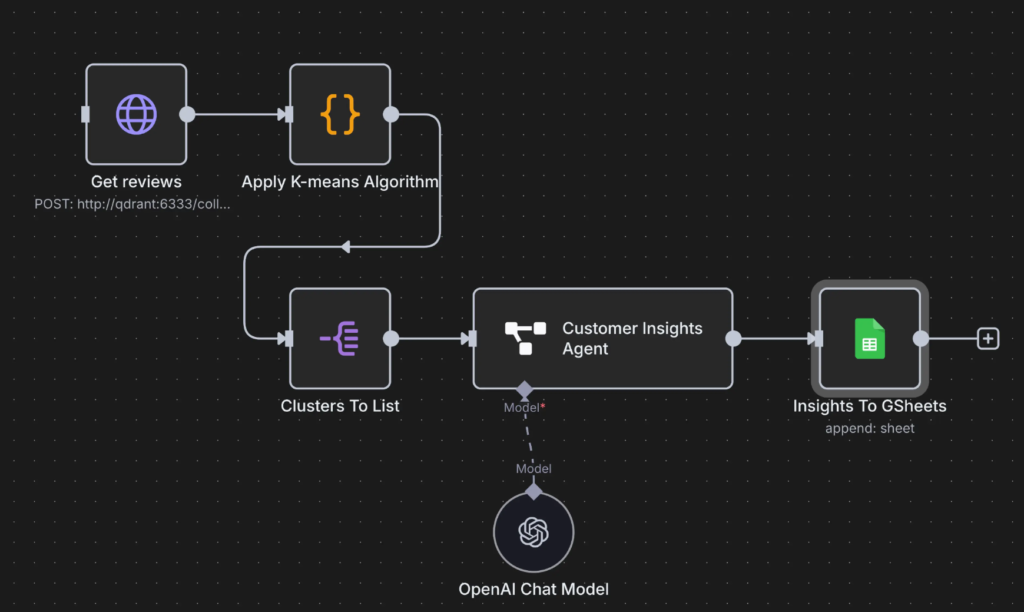
    An n8n workflow is made of nodes connected by lines.

    A typical flow looks like this:

    1. Trigger
      Something starts the workflow
      (Webhook, form submission, new email, scheduled time, etc.)
    2. Processing
      Data gets transformed, filtered, enriched, or analyzed
      (JavaScript, conditions, AI calls, formatting)
    3. Actions
      Data is sent somewhere
      (Notion, Google Sheets, Slack, email tools, CRMs, APIs)

    Each step passes structured data to the next one.

    No magic.
    No black box.


    Why n8n is different from other automation tools

    If you’ve heard of Zapier or Make, n8n plays in the same space, but with very different philosophy.

    1. You own the system

    n8n can be self-hosted.

    That means:

    • Your data stays with you
    • No per-task pricing anxiety
    • Full control over performance and scaling

    For serious builders, this is huge.


    2. Real logic, not toy automation

    n8n supports:

    • IF / ELSE branches
    • Loops
    • Error handling
    • Custom JavaScript
    • API calls with full control

    You’re not limited to “when X then Y”.

    You can build actual systems.


    3. AI-ready by design

    n8n works extremely well with:

    • LLM APIs
    • AI transcription
    • Classification
    • Content generation
    • Agent-like workflows

    This makes it perfect for AI-assisted businesses, not just task automation.


    What can you do with n8n?

    Here are practical, real-world use cases, not buzzwords.


    1. Automate content pipelines

    Example:

    • YouTube video → transcript
    • Transcript → AI summary
    • Summary → blog post
    • Blog post → newsletter
    • Newsletter → social snippets
    • Everything stored in Notion

    One input.

    Many outputs.

    Zero repetition.


    2. Build lead & client systems

    Example:

    • Website form submission
    • Enrich lead data
    • Add to CRM
    • Send personalized email
    • Create follow-up tasks
    • Notify you on Slack

    Your “sales brain” runs automatically.


    3. Create AI-powered workflows

    Example:

    • Receive raw text or voice note
    • Transcribe (AI)
    • Analyze intent
    • Categorize
    • Generate structured output
    • Save it in a database
    • Ask follow-up questions if unclear

    This is where n8n starts feeling like an AI agent, not an automation tool.


    4. Sync tools that don’t talk to each other

    APIs, webhooks, databases, legacy tools.

    n8n doesn’t care.

    If it has an API (or even just HTTP access) you can integrate it.


    n8n’s core capabilities (quick breakdown)

    🔗 300+ integrations (and infinite via API)

    🧠 Conditional logic & branching

    🔁 Loops & batch processing

    🧪 Custom JavaScript execution

    🤖 AI & LLM integrations

    🗄️ Database & Notion-style workflows

    🖥️ Self-hosting & cloud options

    🔐 Full data control & security

    ⚙️ Error handling & retries

    In short: it scales with your brain.


    Who is n8n for?

    n8n is especially powerful if you are:

    • A creator building systems around content
    • A freelancer or consultant managing leads and clients
    • A solo founder who hates repetitive work
    • A technical-curious non-developer
    • Someone building AI-assisted workflows

    If you like understanding how things work, n8n feels right.


    Who n8n is NOT for (honestly)

    • People who want 1-click AI magic
    • Users who hate logic or structure
    • Teams that are not willing to systematize procedures

    n8n rewards clarity and system thinking.


    Final thought

    n8n is not “another automation tool”.

    It’s a system builder.

    If you think in workflows, maps, and processes, n8n becomes an extension of your mind.

    And once you automate the boring glue work, you finally get back what matters most:

    Focus, leverage, and creative freedom.


    Want to go deeper?


    I regularly share practical breakdowns on n8n, automation systems, and AI agents, how they work, how to design them, and how to actually use them to save time and build leverage.

    If you’re interested in thinking in systems and understanding these new tools, join the newsletter below 👇